
Why Touch Is So Important for Mental and Emotional Health
Discover why physical touch matters for men’s mental and emotional health, how it affects stress and anxiety, and why massage helps regulate the nervous system.
Wes Silva
3 min read
Why Touch Is So Important for Mental and Emotional Health
Most of us think of touch as pleasant or intimate — a handshake, a hug, a pat on the back. But touch is much more than a social cue. It is a fundamental human need that interacts deeply with our nervous system, our stress responses, and our emotional landscape. For men especially, who are often taught to suppress vulnerability, touch can be a doorway to calm, presence, and self-awareness.
Touch and the Body’s Stress Response
When we’re under stress, the body’s automatic response is fight, flight, or freeze. Cortisol levels rise, heart rate increases, and muscles tense. This makes sense when there’s an immediate danger — but in modern life, stress rarely comes from lions or immediate threats. It comes from deadlines, expectations, social pressures, and internal tension.
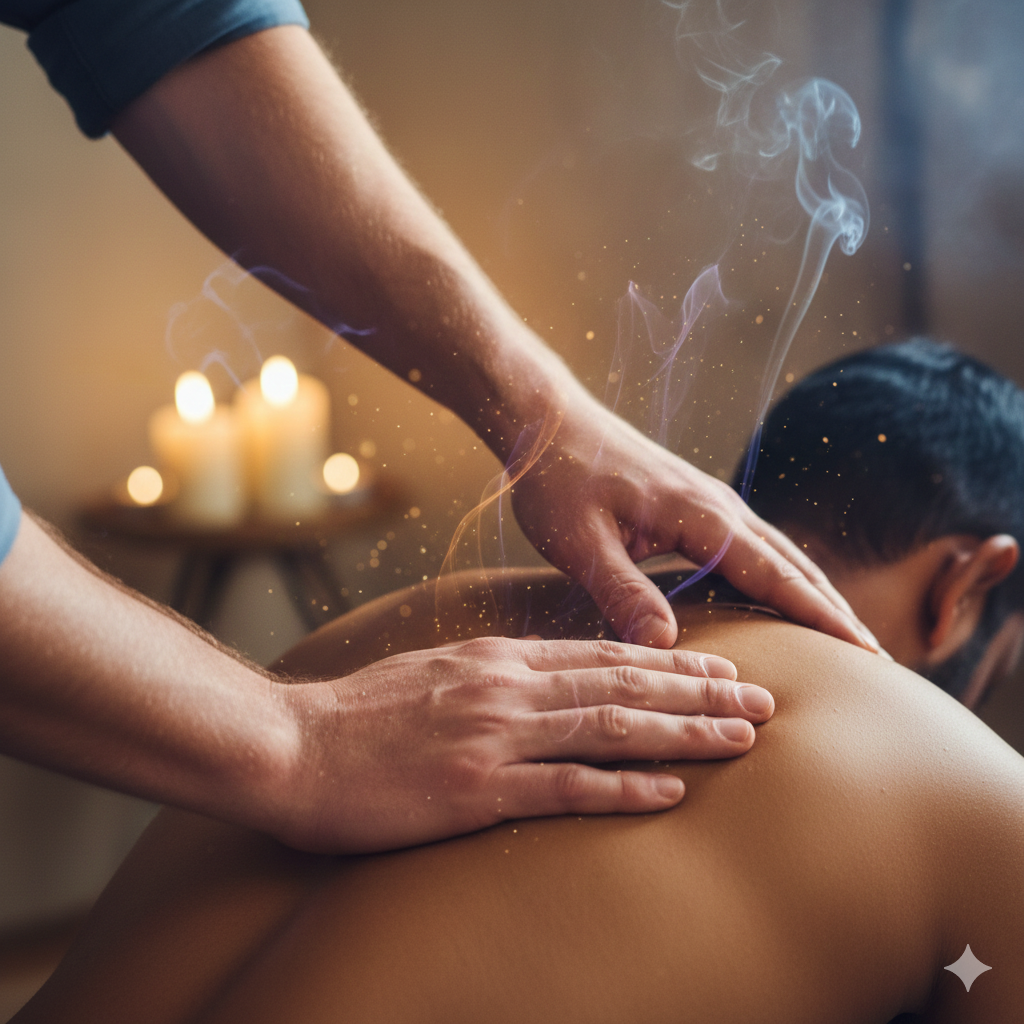
Touch, especially slow and intentional touch like massage, helps switch the body into a different mode. The nervous system shifts toward rest, digest, and recover. This isn’t just a metaphor: scientists measure changes in heart rate, hormone levels, and brain activity. The nervous system interprets safe touch as a signal that danger has passed, letting go of rigid muscle tension and allowing breathing to deepen.
For men who spend years tightening up — physically and emotionally — this shift can feel surprisingly powerful.
Why the Nervous System Loves Touch
Touch activates specific nerve fibers that communicate safety and presence to the brain. When these fibers are engaged gently and consistently, the brain releases chemicals like oxytocin (often called the “bonding hormone”), which help soothe anxiety and foster feelings of calm and connection.
At the same time, touch down-regulates the amygdala, the part of the brain that reacts to threats and fear. That’s why massage can help quiet racing thoughts, ease irritability, and create a sense of grounding that lasts beyond the session itself.
Men, Vulnerability, and Cultural Conditioning
Many men are socialized to see touch as either a sexual thing, or a weakness, or something to avoid unless absolutely necessary.
That’s why some men resist physical touch outside of sports or rough play. But the absence of intentional, calm physical contact has consequences. Without it, the nervous system can remain in a low-grade stress mode — muscles stay tense, breathing stays shallow, and the brain stays alert.
Massage provides a non-sexual, non-judgmental space where the body can respond without performance, expectation, or pressure. That alone can feel strange at first — because many men have never had that experience before.
Touch, Anxiety and Emotional Regulation
Anxiety is not just a mental story — it’s a physical state. When the body stays tense, the brain thinks there’s still a threat. Touch helps interrupt that feedback loop.
By promoting deep breathing, lowering cortisol, and increasing calming hormones, touch allows the body and mind to relearn how to settle. It’s like telling the nervous system, “It’s safe now.” Over time and with consistent exposure, this becomes a learned response rather than just a temporary state.
This doesn’t erase problems, but it gives the body real feedback that calm is possible.
Touch Beyond Relaxation — Presence and Awareness
Touch does something else that is less talked about but equally important: it brings awareness into the body.
For many men, stress isn’t just “in the head.” It’s in the shoulders, in the jaw, in habitual tension patterns that are ignored until they become pain. Massage brings attention back into the body — not in a self-critical way, but in a felt way. You start noticing how your shoulders settle, how your breath deepens, how your posture shifts.
That’s not just physical. That’s emotional presence. It’s a reminder that your body is not something separate from your emotional life — it’s where your emotional life lives.
A Human Need, Not a Luxury
Touch isn’t a fringe idea or a “spa thing.” Research increasingly shows that regular physical contact supports:
stress regulation
lower anxiety
better sleep
improved mood
increased resilience
These aren’t just feel-good claims; they’re measurable physiological effects. And because Western culture often under-values intentional touch, especially for men, it can be surprising how deep the impact is.
Touch is as natural and essential as breathing — it’s part of how the nervous system learns safety, how the body releases tension, and how the mind quiets its noise. In a world where touch is often sexualized or avoided, rediscovering it as a source of calm, presence, and emotional connection can be transformative.
If you want to experience what your body actually feels like when it’s safe to let go, book a session and give yourself the chance to feel that difference firsthand.